Tuesday, January 20, 2009
Knitting and Technology

Tuesday, November 18, 2008
Jenn & Jason October 31, 2009


Saturday, November 01, 2008
Jenn & Jason Erny October 31, 2008


 Grace Church, Massapequa, New York October 31, 2008. The wedding of Jenn and Jason Erny.
 Jenn in her wedding gown. A happy bride. Mother and Father of the groom and the groom.


Monday, June 23, 2008
 Katazome Workshop at Convergence 2008 Tampa Florida
Here are some photos from John Marshall's workshop in Katazome, rice resist and natural dye techniques. So many topics have been discussed during the workshop that pictures really tell a thousand words.
Some of the equipment used in the process; mixing the rice resist and the ceramic dishes for the pigments. A bowel of soy beans plumped and reading to make soy milk.


The two bowls with the golden liquid are the rice resist ready to use.

Stencils to be used with resist process.

Applying the rice resist to the stencil.
These are a few of the things we did on the first day in class.
Wednesday, September 26, 2007
Natural Dyes & Cotton Production

September in Missouri ~ Weekends of Fun
Chautauqua at Chillicothe
Natural Dyes; yarns and dye materials are displayed to show what can be done with plants and little bugs. Many of the plants are found in Missouri. Goldenrod, Osage Orange being but a few. Indigo, Cochineal and logwood come from far away.
The shawl at the foot of the display was dyed with Osage orange and indigo. All the wool was grown and spun in Missouri. Madder roots are in the round basic.
This demonstration was for Chautauqua at Chillicothe , Missouri, a two day even. An ancient arts area is setup and fiber guild memories from Fiber Gals in Chillicothe, Osage Spinners and Weavers in the Kansas City area and University of Missouri Extension.
Five thousand people walked through the park during the two day even; buying crafts, eating caramel corn and have pocket tacos. Pocket tacos are made with an open small bag of corn chips covered with taco meat, lettuce, tomato and cheese. Then add hot sauce! A real treat.

Cotton Production at the Kansas City Community Garden
Each fall the community garden holds children's day. This educational experience allows parents and grandparents to bring children to the gardens and hunt for bugs, look at all the flowers and help set butterflies free.
This year all the flowers were blooming, the vegtable garden had many fall offerings. The cotton plants came in several colors, white, brown and green.
Jerry and I took natural colored cotton, spinning wheels and a loom to show out to process and spin cotton fibers.
Tuesday, June 12, 2007
Summer in Southwest Missouri

Well here I am in the airport in Chicago! Can you tell that it is a hot afternoon and I have all the technology plugged in! Checking e-mail answering the phone and waiting, not to patiently for a plane.
I have just returned from TNNA in Columbus, Ohio. I took five classes in four days and checked out all the new yarns and gadgets available for the fall.
Simply Shetland is carrying Opel sock yarn and what great new colors are coming later this year. Our first shipment arrived yesterday(J. Wray & Co.); cotton/wool/nylon blend in some great colors; wool/nylon blend also in great color combinations. I started a pair of socks last evening in a gold, brown and green color way. I am using number 2.5 mm needles from Lantern Moon, they are so smooth and feel just great in the hand.
There are many great colors coming from Simply Shetland this year, a new silk and Shetland blind that comes in soft muted colors and drapes just beautifully. We will see this in the fall as well. We will have it at J. Wray & Co. as soon as it is shipped.
I am currently working on the rectangle loom (Hillcreek Fiber Studios) to create a new jacket design. What a great tool for plain weave fabric. The yarn is a hand spun silk and wool blend is shades of green and blue. I am designing as I go, so it will be a surprise when i finish!
Tuesday, November 07, 2006
Soar 2006 Lake Tahoe California
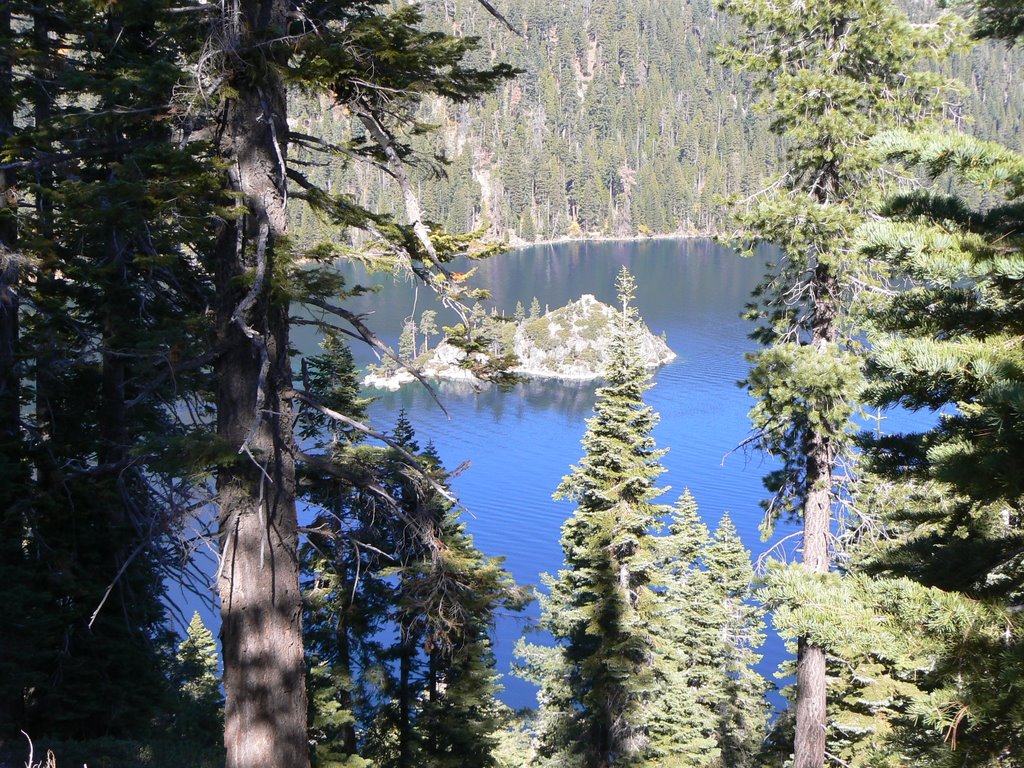
Soar 2006 ~ What a Great Week!

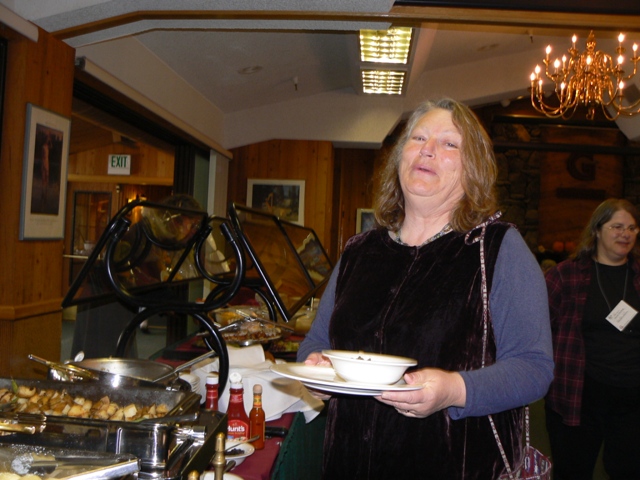
Registration at Grandlibakken - Thanks for all the hard work the staff and Interweave Press provides to make this great event possible!
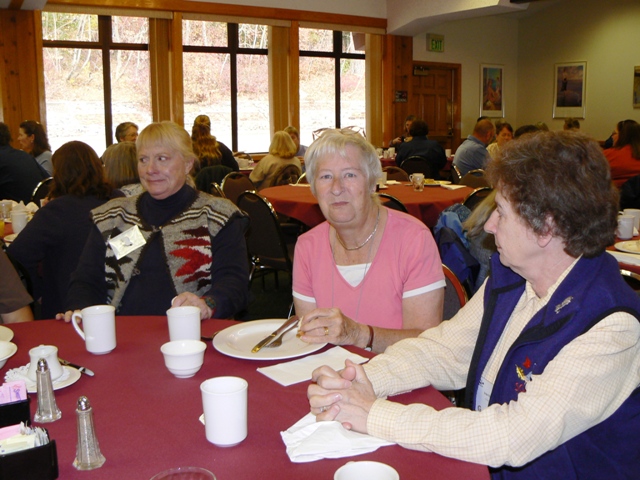
Breakfast at Grandlibakken Resort. Instructors and students ready to start their workshops.